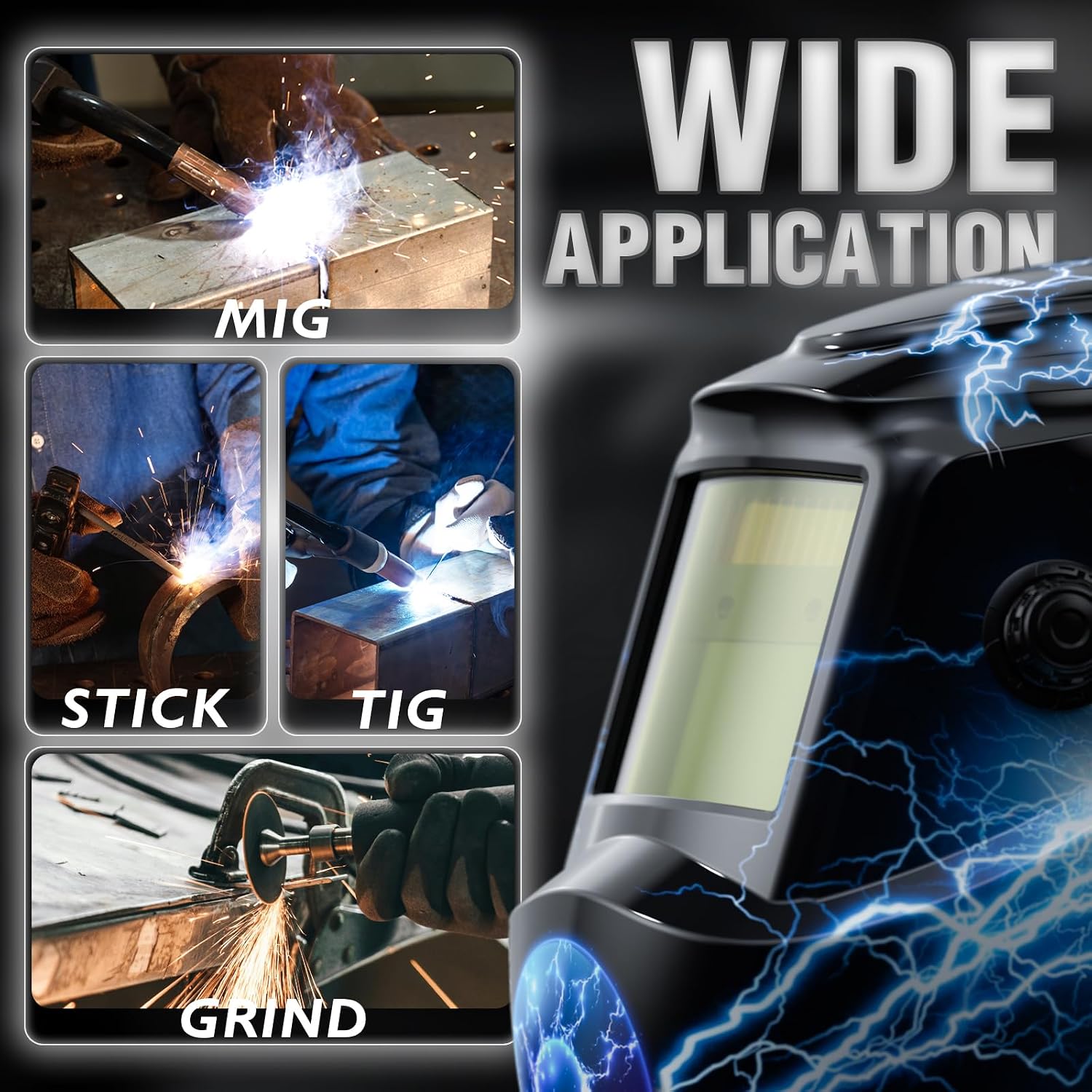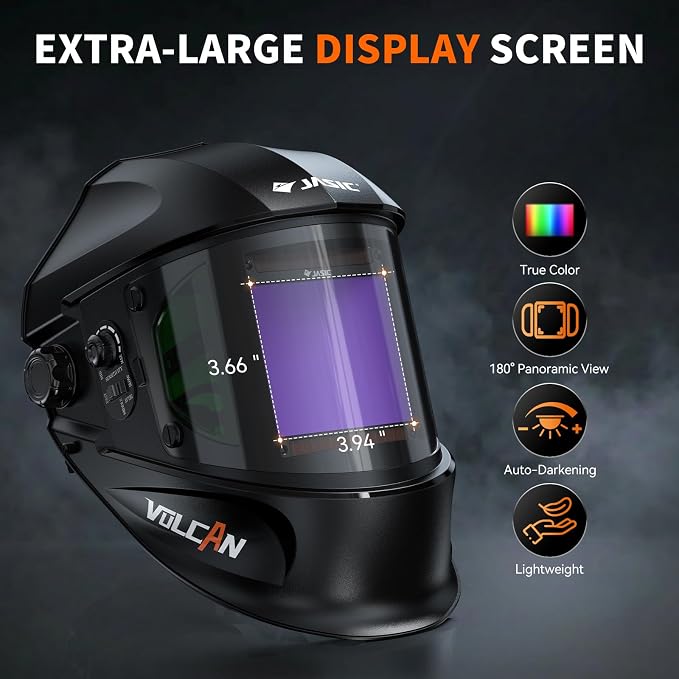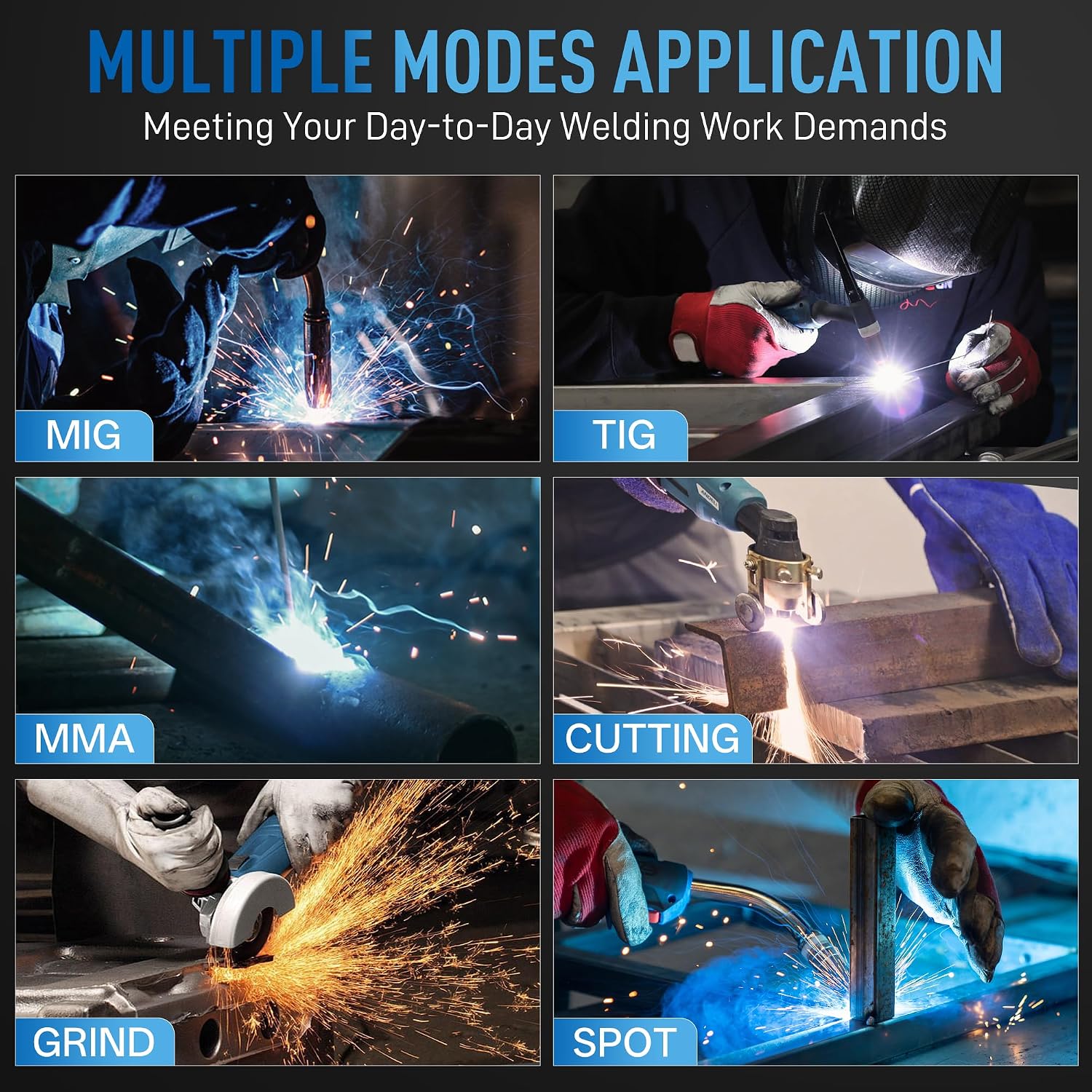
Professional welding requires equipment that can withstand demanding working conditions. A good welding helmet should provide consistent protection while allowing welders to see their work clearly and comfortably. The right welding helmet depends on the process you perform most frequently. Lens shade requirements, arc characteristics and working conditions can differ significantly. An auto-darkening helmet is often convenient for professional welders who perform frequent starts and stops or work on intricate joints. A passive helmet may be appropriate for some applications where simplicity and cost are priorities. The best choice is the helmet that provides the required protection, meets the needs of the welding proces and can be used correctly and consistently. Choosing the best welding helmet for professional welders is essential for safety, precision, comfort and productivity. Whether you work in an industrial workshop, automotive repair shop, construction site or metal fabrication facility, a reliable welding helmet protects your eyes and face from harmful radiation, sparks, heat and flying debris. Professional welders often work for extended periods and perform different welding processes, including MIG, TIG, and stick welding. In this guide, we explore some of the best welding helmets for professional use.
Welding Helmets Safety Tips for Pro Welders?
Your welding helmet is the single most critical shield between you and permanent vision damage, flash burns and intense infrared (IR) or ultraviolet (UV) radiation. For professional welders clocking long hours in high-amperage environments, relying on basic headgear isn’t enough. Pro welders need strict helmet and face protection protocols to prevent arc eye, retinal damage and thermal burns. Follow these safety precautions;
Test Auto-Darkening Filters: Test your auto-darkening lens before striking an arc by checking it against a bright light source or using a torch striker. Change dead batteries immediately and don’t use an ADF if the auto-darkening feature fails.
Match Lens Shade with Task: Use a proper filter shade level typically levels 2 to 14 depending on the process by switching to lower shades for grinding and higher shade ranges (such as 9 to 13) during high-intensity welding.
Inspect Helmet Before Every Use: Check the lens, shell, cover plates, headgear, and adjustment mechanisms for cracks, damage, contamination or excessive wear. Replace damaged components with parts approved by the manufacturer.
Wear Safety Equipement: A welding helmet does not replace suitable protective clothing, welding gloves, safety footwear or respiratory protection when required. Use appropriate eye protection for grinding and other tasks performed with the helmet raised.
Never Lift the Hood Mid-Arc: Avoid flipping your helmet up while the arc is active or to inspect a fresh weld and rely on auto-darkening technology for continuous UV and IR shielding.
Weigh Comfort and Fatigue: Choose carefully a lightweight and well-balanced shell to reduce shoulder and neck fatigue over long shifts which directly cuts down on operational errors.
Maintain Ventilation: Welding fumes can contain hazardous substances depending on the base metal, coatings, filler materials and process. Use appropriate ventilation and exposure controls and select respiratory protection when required by a workplace risk assessment.
List of Must-Have Welding Helmets for PRO Welders:
Here is the list of top rated and top features welding helmets for Pro welders;
1. ANDELI Auto-Darkening, Digital Display Welding Helmets:
It features a digital control panel that clearly displays shade, sensitivity and delay settings by making adjustments easier than traditional knob-only welding hoods. With DIN 3 / 5–9 / 9–13 shade control and 5-level precision adjustment for sensitivity and delay welders can quickly fine-tune the helmet for MIG, TIG, Stick, cutting and grinding applications. It is featuring a total viewing area of 7.2″ x 3.2″,(4.6″ x 3.2″ main auto-darkening lens, supplemented by two 1.3″ x 2.5″ side lens),30% Wider Field of View with Dual Side Window all lenses offer true color views with top Optical Clarity. Four mode function (Welding&Grinding&Cutting&Lock).(Lock Mode: Used for temporarily locking the current darkening settings during welding. It is Ideal for repetitive tasks. It is upgraded auto-darkening lenses with 4 premium arc sensors switching from light to dark in 1/30000s. It easily adjust the shade and sensitivity of the lenses for different working environments. It is perfect for STICK/MIG/TIG welding, grinding and cutting. It is a budget fiendly option for expert welders.
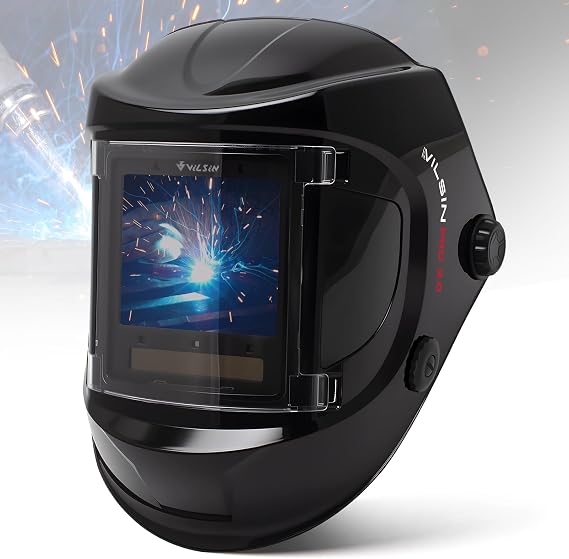
2. VILSIN Auto Darkening:
It features ARC welding hood large view with viewing area 3.85″x 3.42″ | With SIDE VIEW(DIN4,non auto-darkening) | 1/1/1/1 Optical class with 5 premium sensors | Adjustable shade range 3/4-8/9-14 andsuitable for TIG, MIG, MMA, ARC, grinding, plasma cutting and other welding applications. It meet different working needs of professionals and DIY enthusiasts. Package includes Welding helmet*1, 3 pcs outside lens, 2 pcs inside lens and 2 pcs side view cover. It has lightweight structure with adjustable headgear ensures a secure and comfortable fit for long time wearing. It provides replaceable CR2032 battery 2 Lithium Ion batteries required. The solar cells can absorb the strong light energy caused by the electric arc, thus extending the battery life. The lithium battery is replaceable.
3. Lincoln Electric K3034-4 Viking 3350:
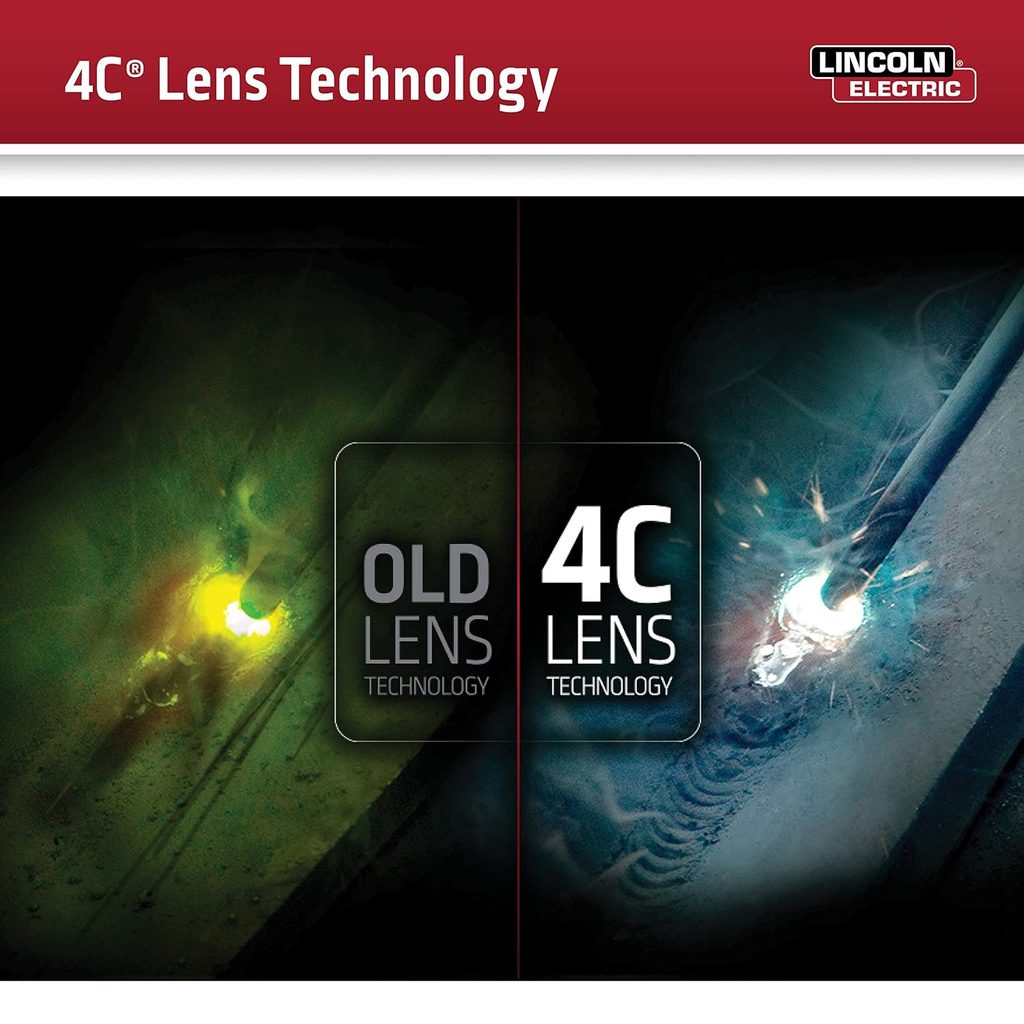
4C Lens technology and perfect 1/1/1/1 optical clarity eliminate imperfections and color saturation to create the clearest view of the base material, arc and puddle. This rating is determined by measuring blurriness, distortion, shade consistency and angle uniformity of the auto-darkening welding lens. The 12.5 square inch auto darkening lens provides a large field of view to increase versatility and operator control. Innovative X6 Headgear distributes weight, reduces pressure and optimizes balance. Industry Leading 5 year hassle free warranty. Comfortably fits hat size range of 6 1/2 – 8. headgear tightness is adjusted by turning the Ratchet Knob to the right or left to adjust for the desired head size.
4. Lincoln Electric VIKING 3350 Mojo Welding Helmet:
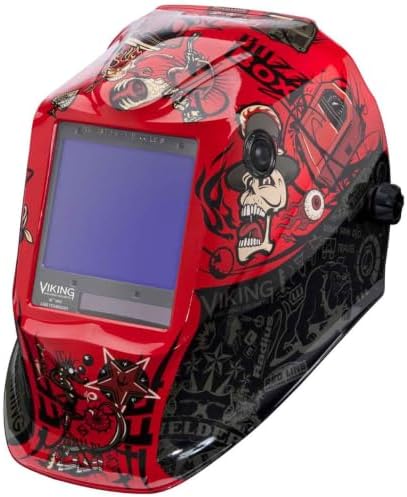
It has 4C Lens Technology, 1/1/1/1 optical clarity and extra large 12.5 sq. inch viewing area. Its innovative X6 headgear distributes weight, reduces pressure and optimizes balance. It features external low profile grind control. It has optimized performance for all welding/cutting processes and environments. Industry Leading 5 Year hassle free warranty. The top rated welding series for pro level welding process.
5. ESAB Sentinel A60:
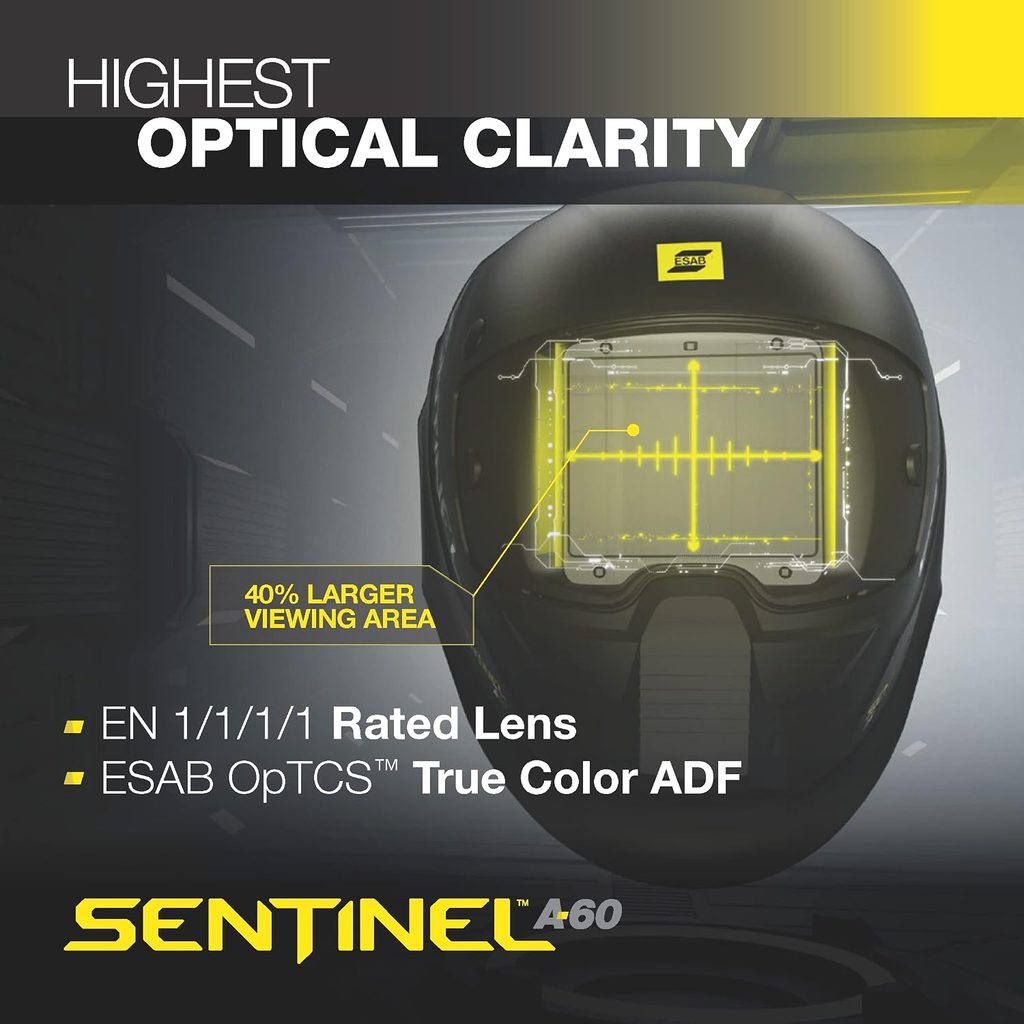
(4.65 x 2.80 in) and intuitive internal ADF controls including sensitivity and delay. Shade range is DIN 3/5–13, adjustable in 0.5 increments and ADF a shade lock setting. ESAB OpTCS True Color Lens Technology. It features On-board memory for up to 9 settings. It has Arc sensors 4. It has fast switching time of 0.08 millisecond with Replaceable CR2450 battery. It is a top rated welding helmets for professional welders.
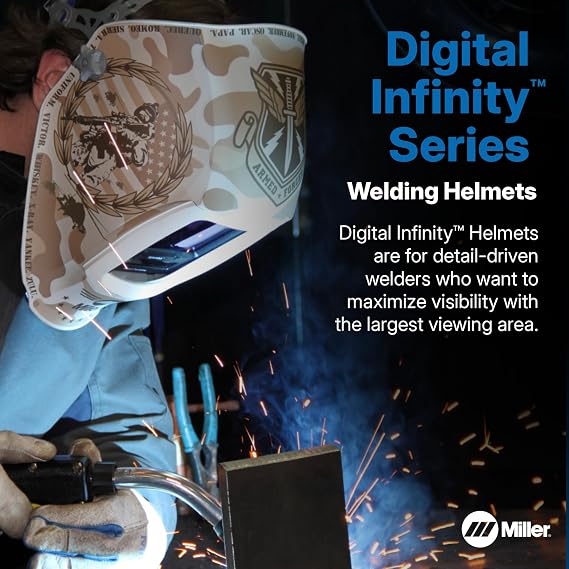
6. Miller Digital Infinity Welding Helmet:
Advanced high-definition optics deliver a clearer, brighter and more realistic view for every stage of every weld. It provides the largest viewing area for maximum visibility. Monitors arc time and arc count for quoting and metrics. Automatically sets the helmet sensitivity by sensing your welding environment. Ideal for weld operators who frequently adjust their settings for changing welding environment. Electromagnetically senses the weld to eliminate sunlight interference and continuously detects the arc even if sensors are blocked.
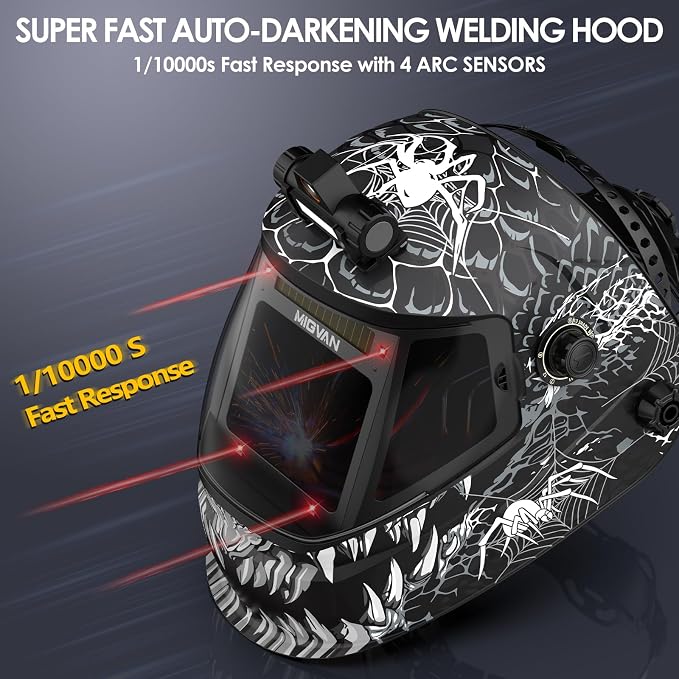
7. True Color Auto Darkening Welding Helmet;
With 4 arc sensors and a 0.1ms switching time, this auto darkening welding helmet reacts quickly when an arc is detected. It helps reduce exposure to intense arc light while you work. The welding helmet uses optical class and provides UV/IR DIN16 protection. This combination supports a clear view and helps protect your eyes during welding tasks. The mode switch offers GRIND, 5-9 and 9-13 settings. With DIN 4/5-9/9-13 dark state and DIN 4 light state, you can set the shade for different welding and grinding tasks. Weighing about 585g, the welding helmet has a PA shell, adjustable headband and sweat pad. These features help keep the mask secure and comfortable during longer sessions. Suitable for Stick, MIG/MAG, TIG, plasma cutting and grinding. Do not use for laser welding or cutting. Please read the user manual before use.
Final Verdict:
The best welding helmets for professional welders combine dependable protection, clear optics, comfortable headgear, suitable shade settings and durable construction. Lincoln Electric Viking, Miller Digital Elite, ESAB Sentinel are useful options to investigate based on your specific needs. Before making a purchase, compare the exact model specifications, verify applicable safety certifications, check replacement-part availability and ensure the helmet suits your main welding process. The right and perfect helmet can improve working comfort and visibility while helping you maintain appropriate protection throughout demanding welding jobs.
FAQs
1. How long does a professional welding helmet last?
The lifespan depends on usage, storage, maintenance, exposure to heat and spatter and the condition of its electronic and mechanical components.
2. What shade should a professional welding helmet use?
The correct shade depends on the welding process, current and other working conditions. Follow the helmet manufacturer’s recommendations and applicable safety guidance instead of relying on one shade setting for every task.
3. Can a welding helmet Be used for grinding?
Some welding helmets include a dedicated grinding mode but not every helmet is suitable for grinding. Use only a model designed and approved for the task.
4. How much should you spend on a professional welding helmet?
Your budget should reflect how frequently you weld, the required features and the cost of maintenance and replacement parts. Compare the total cost of ownership and verified safety performance rather than choosing only by price.
5. What are the three features a good helmet should have?
A good helmet should have proper safety certification, a proper snug fit and a secure retention (chin strap) system.