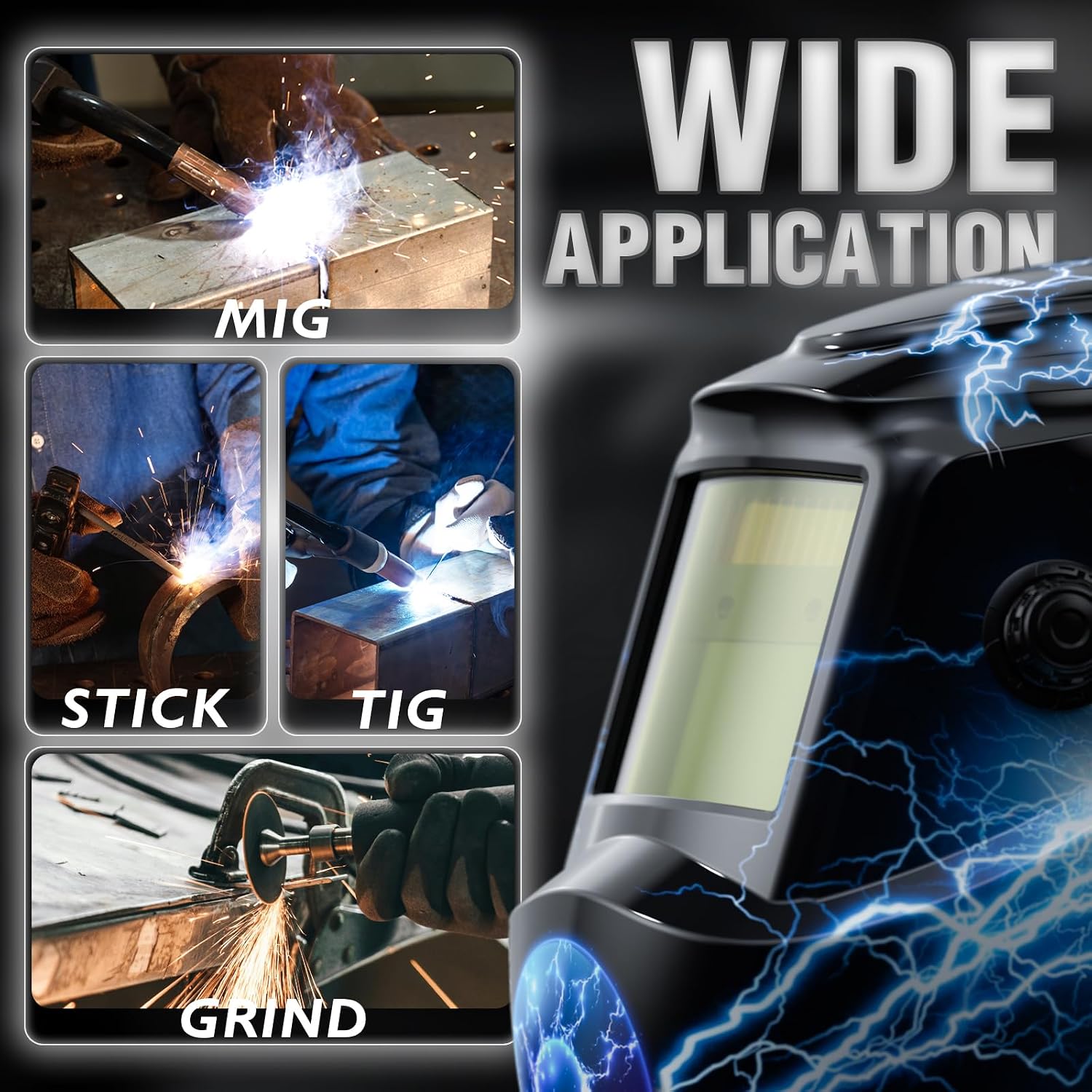
TIG also known as Gas Tungsten Arc Welding (GTAW) is an arc welding process that uses a non-consumable tungsten electrode to heat the metal and create a strong, clean weld. You can melt thin metals together without extra material (autogenous welding) or manually feed a separate filler rod into the puddle with your other hand. A foot pedal and torch control lets you adjust the electrical power (amperage) live for smooth starts and stops. The best welding helmet for TIG welding offers dependable eye protection, a sensitive auto-darkening filter, adjustable shade settings, clear optics and a comfortable fit. Professional welders may prefer premium helmets with large viewing areas and advanced optical technology, while beginners can often find excellent value in reliable mid-range models. Choosing the best welding helmet for TIG welding is essential for achieving precise welds, protecting your eyes and working comfortably for extended periods. Whether you are a beginner, hobbyist or professional welder, the right TIG welding helmet can improve your visibility and make detailed work easier. In this guide, we explain what to look for, common mistakes to avoid and the best TIG welding helmets for your needs.
Mistakes to Avoid Before Buying a TIG Welding Helmets:
For a TIG welding helmet, look for an auto-darkening lens with a 1/1/1/1 optical rating, true-color clarity, at least four arc sensors, low-amp TIG rating down to 5 amps and a wide shade range (typically #5 to #13). Avoid these common TIG welding helmets mistakes if you want to buy the best TIG welding helmets;
Low-Amperage Performance: A filter that works well for high-current welding may not perform equally well at low TIG currents. TIG welding often uses very low amperages (under 5 amps) where the arc is less bright. Buying a helmet with only 2 sensors or poor low-amp response can cause the auto-darkening filter (ADF) to flicker or fail to trigger with burning your eyes. Look for 3 to 4 high-grade sensors built specifically for low-amp TIG.
Compromising on Optical Clarity: A helmet may have many features but still provide an unsatisfactory view of the weld pool. Look for clear optics and compare the viewing experience at your usual working shade.
Ignoring True-Color Tech: Standard green-tinted legacy lenses distort the look of the molten puddle and heat-affected zone. Go for true-color/natural-color technology for realistic color contrast and less eye fatigue during long sessions.
Using the Wrong Shade: A shade that is too light can expose your eyes to excessive visible brightness. Follow the recommended shade selection for your welding current and process.
Neglecting Protective Cover Lens: Spatter, dust, scratches and contamination can reduce visibility. So, inspect the helmet regularly and replace damaged cover lenses according to the manufacturer’s instructions.
Buying Fixded Shade Lenses: Passive or fixed-shade helmets force you to nod or flip the hood up and down constantly by ruining your hand position and torch stability on delicate TIG runs. Use a variable auto-darkening filter (ADF).
Single Point Headgear: TIG projects take hours for steady concentration. Flimsy elastic straps or cheap plastic nuts slip, tilt or add front-heavy neck strain. Choose multi-point ratchet headgear that balances the weight evenly.
Price Matters: A low price may not reflect long-term value if the helmet is uncomfortable or replacement parts are difficult to find. So, consider warranty coverage, consumable costs and local availability.
List of Must-Have TIG Welding Helmets:
1. ANDELI Auto Darkening Welding Helmet:
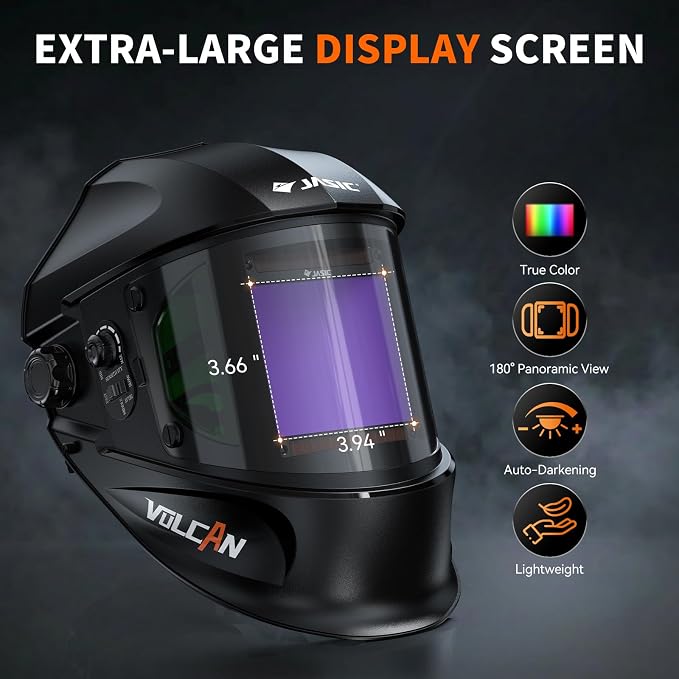
ANDELI welding helmet large viewing screen allow you to enjoy a wide viewing area of 3.94×3.74 inches with an additional 3.72×1.76 inch Side View (DIN4 and non auto-darkening). Auto darkening large view welding helmet with lights ensures your welding precision and control with a full vision range around the welding arc. This true color welding helmet provides natural color accuracy by letting you experience unparalleled clarity and true color views with 1/1/1/2 Optical Clarity. This true color welding helmet with lights comes UV/IR protection up to shade DIN16 by ensuring your eyes are safeguarded at all time.
2. Toolium Auto Darkening & Solar Power for TIG:
Do not waste time taking your helmet off between tasks. With the convenient external control knob, you can easily switch into Grind Mode right on the fly with your gloves on. By offering a wide shade range of DIN 3.5/9-13, this versatile helmet adapts instantly to TIG, MIG, MMA (Stick) and plasma cutting by keeping your workflow smooth and uninterrupted. Weighing in at just 1.14 lbs, this helmet minimizes neck fatigue when welding out of position or sliding under a car chassis. The fully adjustable, premium PE headgear conforms perfectly to your head size and angle, while the breathable sweatband wicks away moisture. It is built for all-day wearability by making it ideal for both beginners and seasoned fabricators.
3. Jakson Safety Auto Darkening:
Jackson Safety’s Insight ADF Welding Helmet features the HSL narrow shell design and ideal when working in tight spaces. Its extended front lip provides added neck protection and 3.94″ x 2.36″ viewing area offers unobstructed views without lifting the hood. Variable shades 9 to 13 and latest advancements in True Color technology deliver a crystal-clear view and 1/1/1/1 optical clarity rating significantly reduces eye strain and fatigue.
4. Yeswelder Auto Darkening:
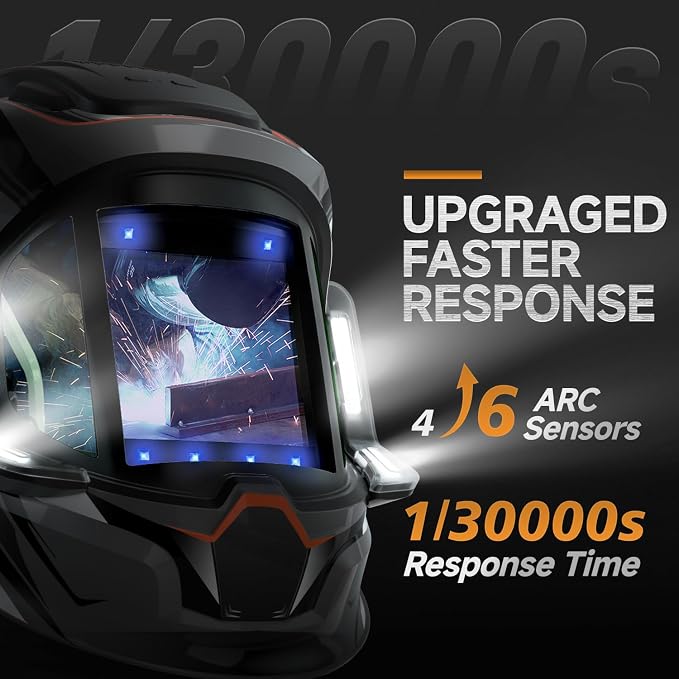
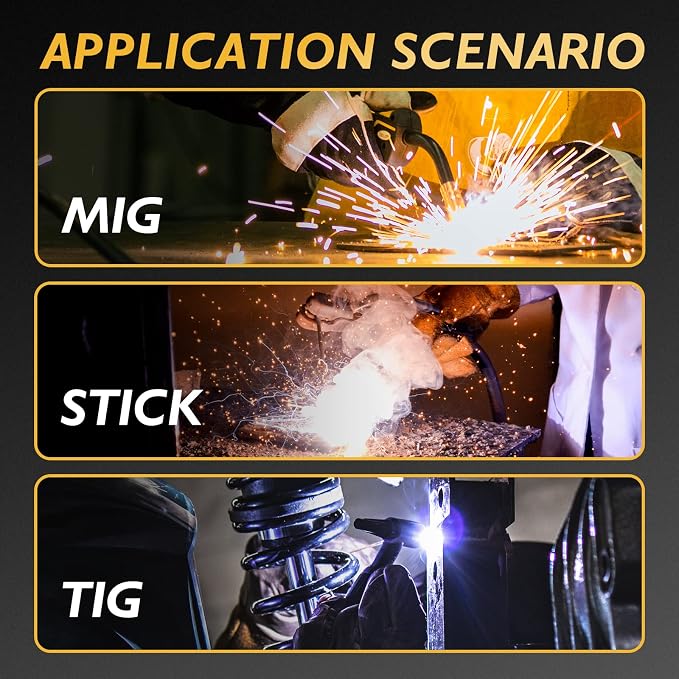
The welding hood is equipped with a 3.94″ x 3.23″ large view with side view (DIN5, non-auto-darkening) featuring 1/1/1/1 optical clarity lenses and True Color technology. It features a versatile Shade Range (3/5-9/9-13) and perfect for Professional Welding(TIG, MIG, MMA), CUT and GRIND. It covers most processes with precision protection. It easily accommodates Magnifying Lenses for close-up work. This auto darkening welding helmet features 4 Arc Sensors for reliable arc detection, ultra-fast switching (1/30000 sec) and adjustable Sensitivity and Delay controls for perfect performance. It is powered by solar panel technology and replaceable CR2450 lithium battery.
5. Lincoln Electric Viking 3350:
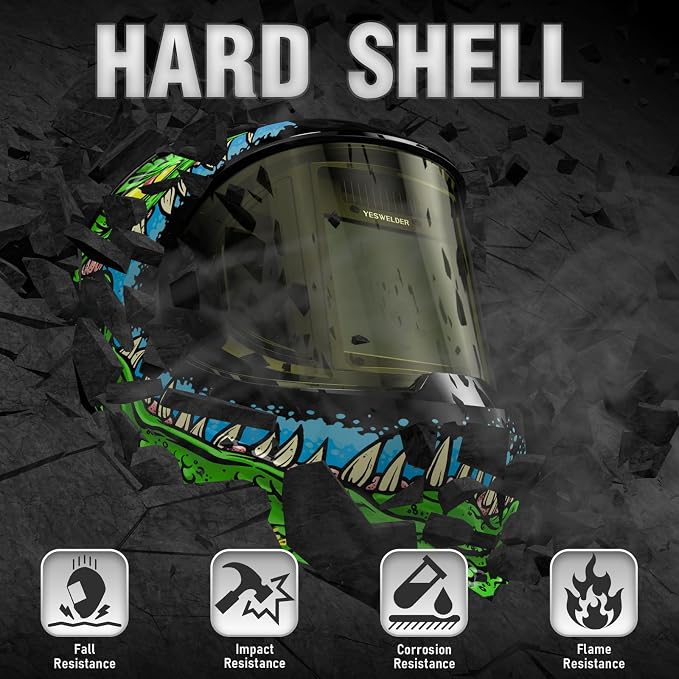
It has 4C Lens Technology, 1/1/1/1 Optical Clarity and extra large 12.5 sq. inch viewing area. Its innovative X6 Headgear distributes weight, reduces pressure and optimizes balance. It increased productivity and safety level. It has external low profile grind control. It optimized performance for all welding/cutting processes & enviroments. Industry Leading 5 year hassle free warranty. It is a top rated welding series for all welding process.
6. Miller Classic Series:
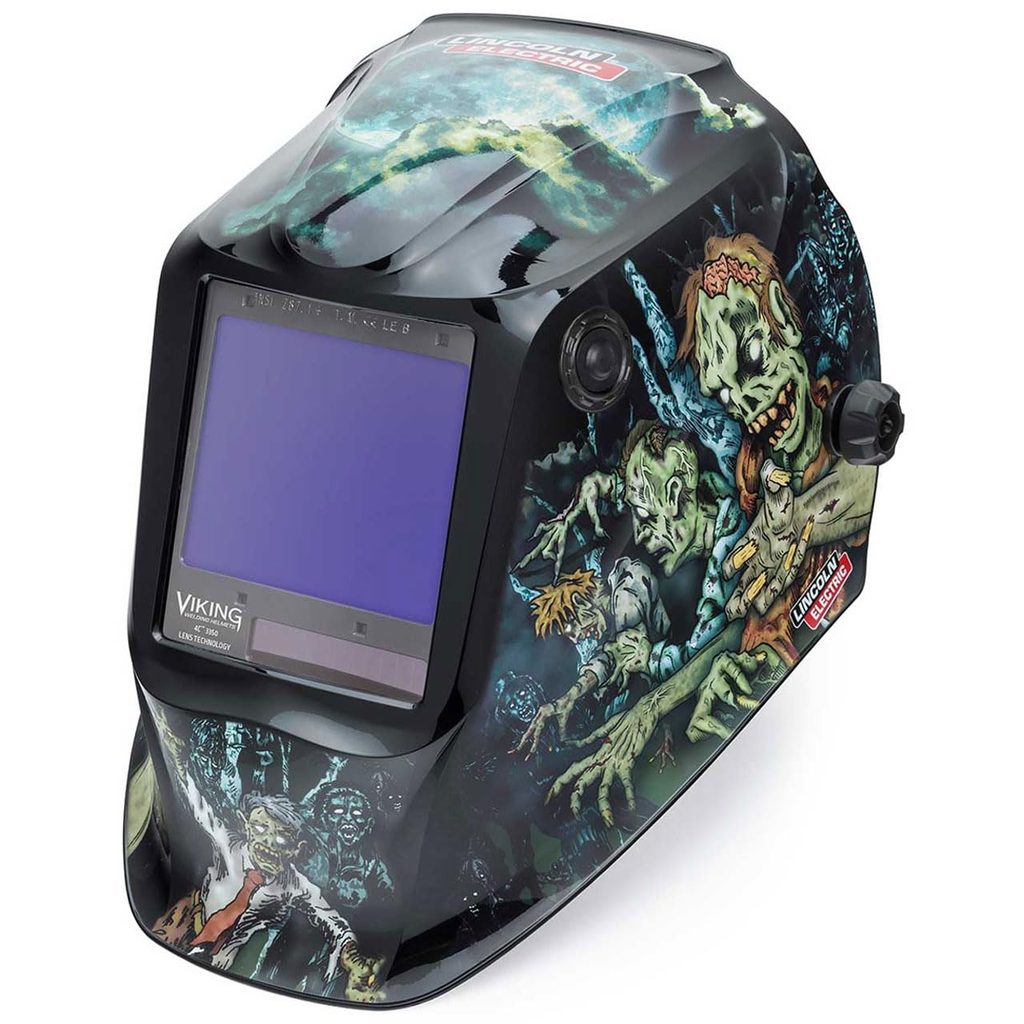
It features clear light lens technology for high-definition optics. It ia perfect for welding at five amps or below. It provides weld shades 8-13, cut shades 5-8 and grind shade 3. It has two arc sensors with 1/23,000 second switching speed. It is ideal for precision welding tasks. This welding hood with adjustable digital controls for shade, delay and sensitivity. Its ratchet headgear ensures perfect fit and comfortable for extended welding sessions. Welding gear meets ANSI Z87.1+, CSA and CE standards. Its 3.0 light state allows keeping hood down between welds. It improves productivity and safety with three-year warranty included. It is the best TIG welding helmet for professionals.
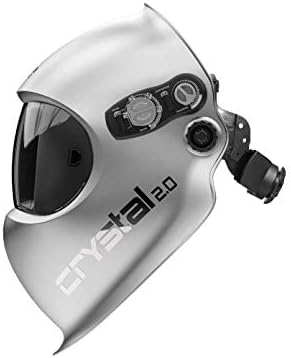
7. Optral Crystel Auto Darkening for TIG:
Crystal lens technology with shade 2. 0 light state see clearly what happens before, during and after the welding process. Detection of the arc brightness and fully automated shade level adjustment from 4 to 12. It adjusts automatically to the changing light conditions of the current welding process. Its twilight feature gradually lightens lens when switching from dark (welding) to light state to ease eye fatigue. It allows operator to change lens switching sensitivity for varying ambient light conditions or outdoor welding in sunlight. It switch quickly and easily between weld mode and shade 2. 0 Grind mode using external controls. There is no need to remove the welding helmet to grind. It is a best choice for TIG/MIG or ARC.
Final Thoughts:
The best welding helmet for TIG welding is the one that combines reliable eye protection, excellent visibility, appropriate low-current arc sensitivity and lasting comfort. Before buying, compare the exact model specifications, optical quality, shade range, warranty, replacement parts and local availability. A wisely-chosen helmet can help you work more comfortably, see the weld pool more clearly and maintain appropriate protection throughout your TIG welding projects. The Miller Digital Infinity and Lincoln Electric Viking 3350 are worth comparing for professional use. The ESAB Sentinel A50 offers a distinctive digital interface. Some budget friendly options are there like ANDELI, YesWelder. Buy these mentioned helmets accordig to your welding needs.
FAQs
1. What are the safety precautions for TIG welding?
TIG welding safety requires protecting against intense radiation, toxic fumes, thermal burns and electrical hazards.
2. What is the “Rule of 33” for TIG welding?
The “Rule of 33” in TIG welding is a high-speed pulse setting guideline used to control heat input, agitate the weld puddle and improve precision on thin or tricky materials.
3. What is the best helmet setting for TIG welding?
For TIG welding, set your auto-darkening welding helmet shade between 9 and 13 depending on your amperage, turn your sensitivity to high and set a medium-to-long delay.
4. Do I weld TIG uphill or downhill?
You should TIG weld uphill for most structural or thick-metal projects because it gives you better heat control, deeper penetration and a cleaner puddle. However, you can weld downhill if you work with very thin metal or need a fast, low-penetration seal.
5. Is TIG welding better than MIG?
Neither TIG nor MIG is universally better instead each process is designed for different applications, skill levels and project goals.