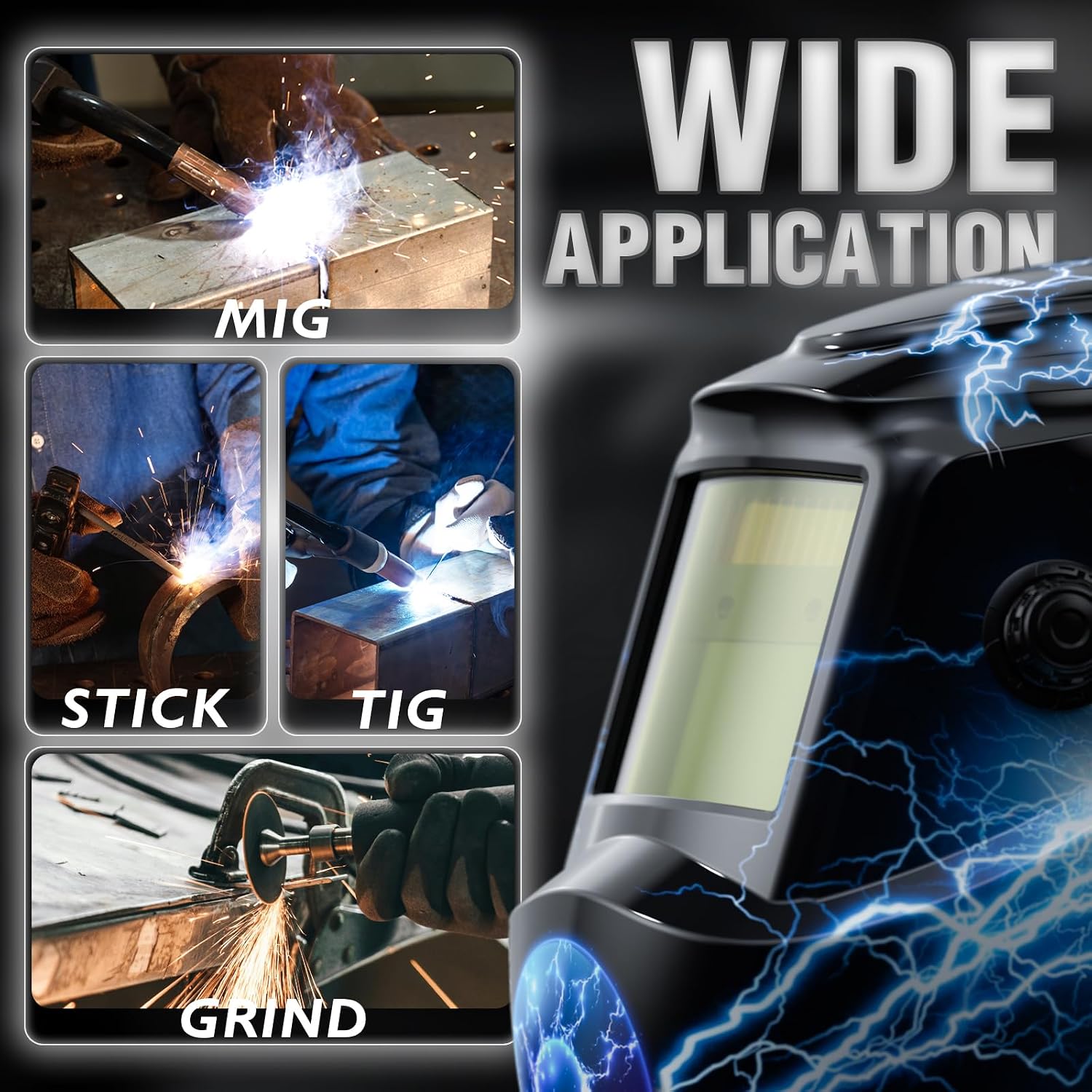
MIG welding or metal inert gas welding is an arc welding process where a continuous, solid wire electrode is fed through a welding gun into the weld pool to join two base metals together. The best welding helmet for MIG welding is one that provides dependable eye and face protection, a suitable shade range, reliable auto-darkening performance and a comfortable fit. For most welders, an auto-darkening welding helmet is a perfect choice because it automatically changes from a light state to a darker shade when an arc is detected. Professional welders may benefit from helmets with a large viewing area, adjustable sensitivity, multiple arc sensors and replaceable lens components. Beginners can often get excellent results with a more affordable model that meets recognized safety standards and offers straightforward controls. MIG welding produces intense light, ultraviolet (UV) radiation, infrared (IR) radiation, sparks and hot metal spatter. A reliable welding helmet helps protect against these hazards while improving visibility and comfort during long welding sessions. In this guide, we will explore the best welding helmets for MIG welding, the features to consider before purchasing and practical tips for choosing the right model for your needs.
Best Welding Helmets for Different Types of MIG Welders:
The best welding helmet for MIG welding depends on your specific application, budget and whether you are a hobbyist or industrial fabricator. The following helmets are worth considering based on their established product lines, intended use and commonly available features. Exact specifications can vary by model, so check the manufacturer’s current documentation before purchasing.
Here is the guide of MIG welders helmets according to their welding process;
Best for Beginners:
Beginners should look for an affordable auto-darkening helmet with clear optics, dependable arc sensors, straightforward controls and verified safety compliance. Avoid choosing a helmet based solely on its price or appearance. YesWelder Large View Welding Helmet (LYG-M800H) or YesWelder Helmet Pro 2.5 are best for MIG beginners, hobbyists or occasional shop repairs.
1. YesWelder Large View Welding Helmet (LYG-M800H):
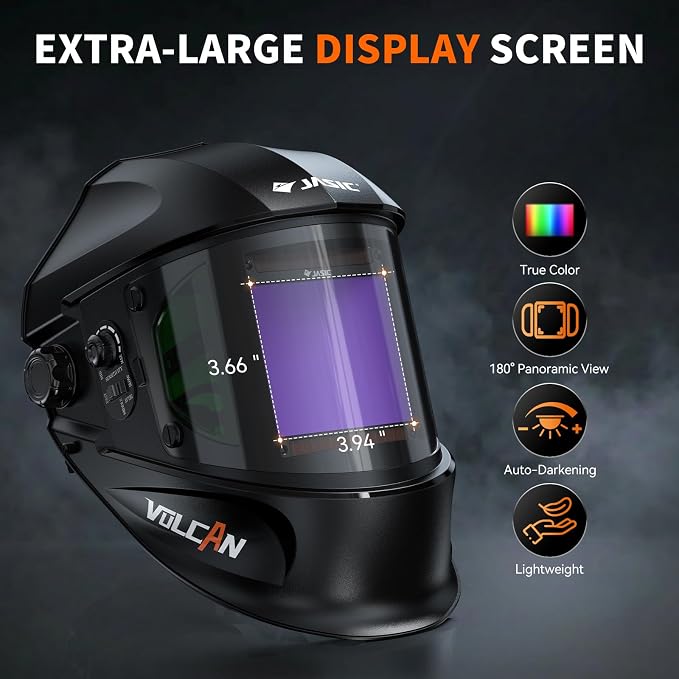
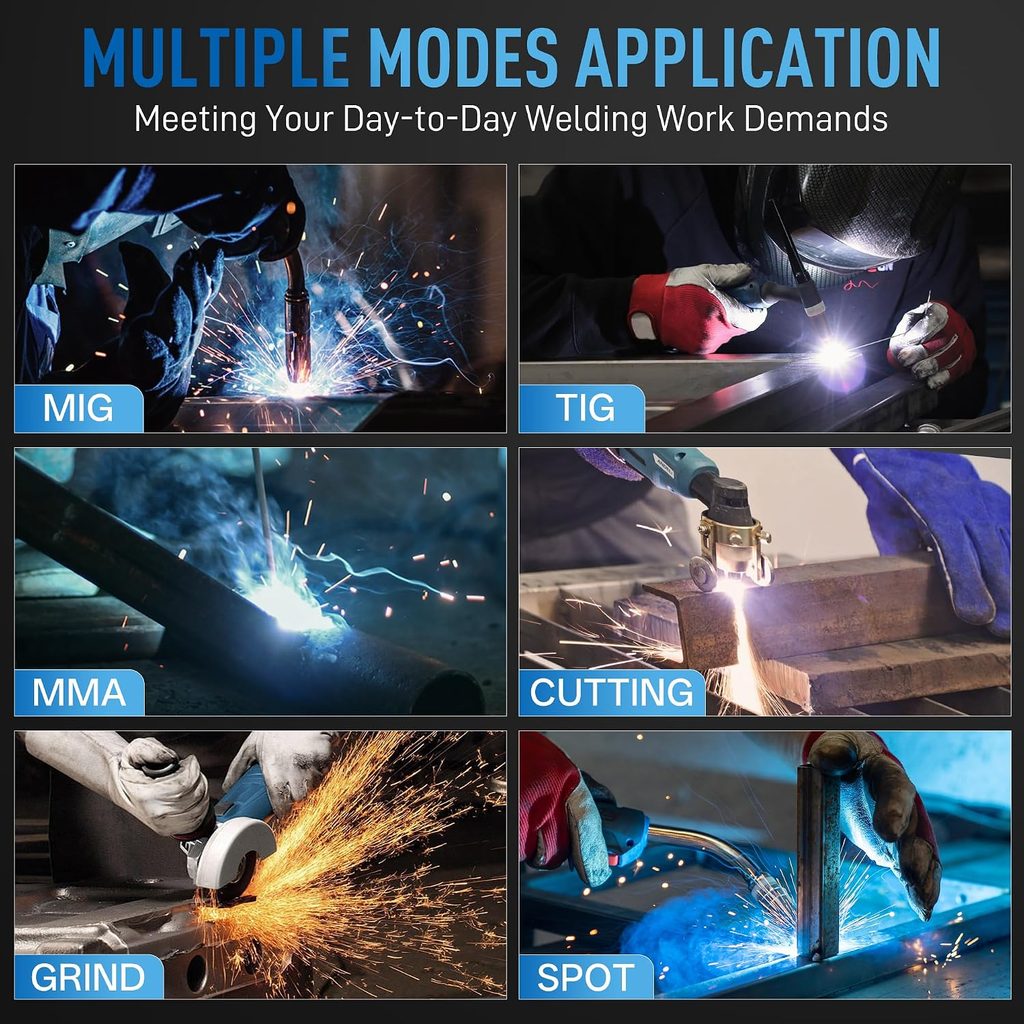
See more of the weld puddle, joint edges and work position through a wide 3.93″ x 3.66″ viewing area. The 1/1/1/1 true-color optical clarity provides a clearer, more natural view than traditional green-tinted lenses, helping support better visibility for detailed welding, fabrication and garage projects. Built with 4 arc sensors and a 1/30,000-second switching speed to support responsive shade adjustment across routine welding tasks. Designed for TIG, MIG, Stick, CUT and grinding applications, including lower-amperage work where stable detection matters.
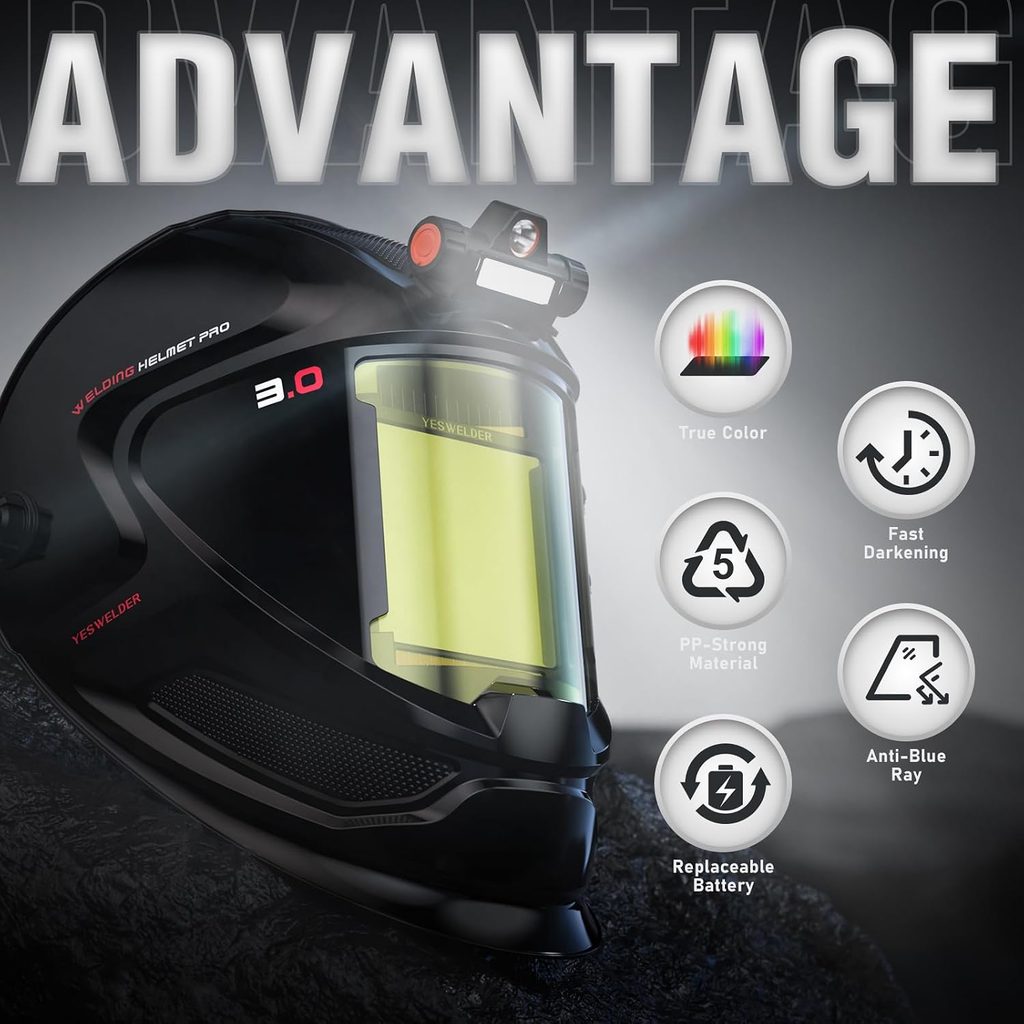
2. YesWelder Helmet Pro 2.5:
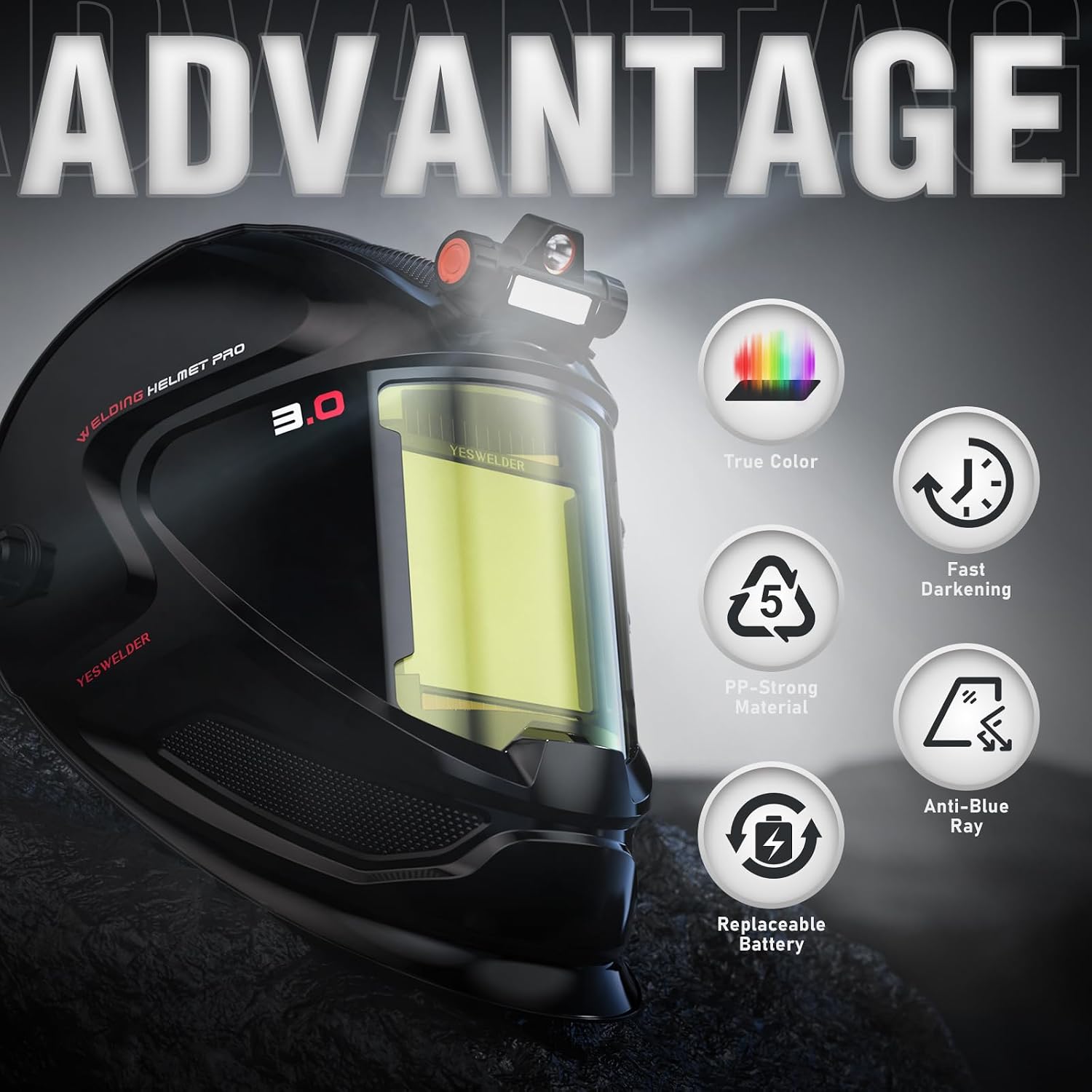
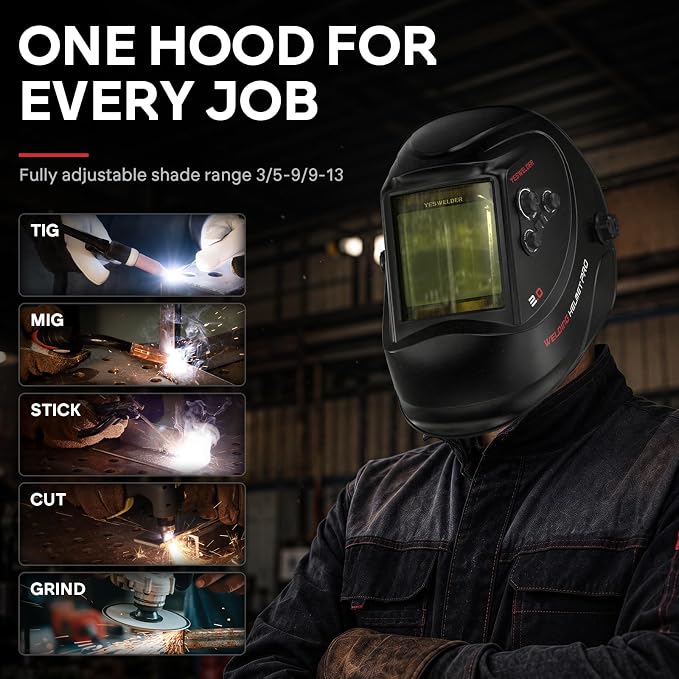
This welding helmet is equipped with a removable adhesive LED light by offering two brightness levels. Avoids light obstruction to ensure clear operation for welding tasks even in dark environments. Wide shade range 3/5-9/9-13, covering most common welding processes, ideal for TIG, MIG, MMA (STICK), CUT & GRIND. Easily accommodates Magnifying Lenses for close-up work. It features 4 Arc Sensors for reliable arc detection, ultra-fast switching (1/30000 sec) and adjustable Sensitivity and Delay Controls for perfect performance.
For PRO MIG Welder:
Professional welders may benefit from premium optical performance, a large viewing area, durable construction, replaceable components and comfortable headgear. The Lincoln Electric Viking, Miller Electric Digital Infinity, ESAB Sentinel, and 3M Speedglas product families are worth comparing for this purpose.
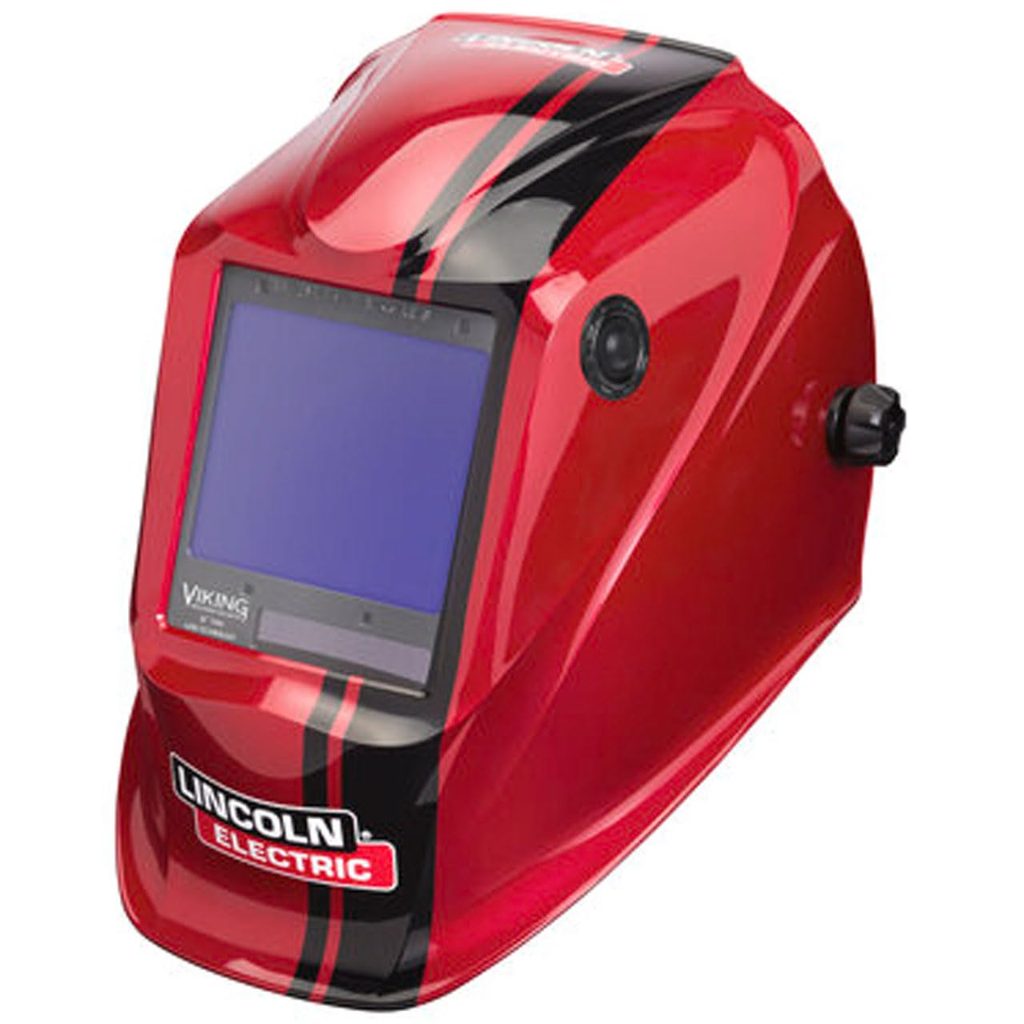
3. The Lincoln Electric Viking:
It provides 4C Lens Technology, 1/1/1/1 Optical Clarity and extra large 12.5 sq. inch viewing area. Its Innovative X6 Headgear distributes weight, reduces pressure and optimizes balance. External low profile grind control. Its ptimized performance for all welding/cutting processes & enviroments. Industry Leading 5 year hassle free warranty. It is top rated series and best features for professional MIG or any welding process.
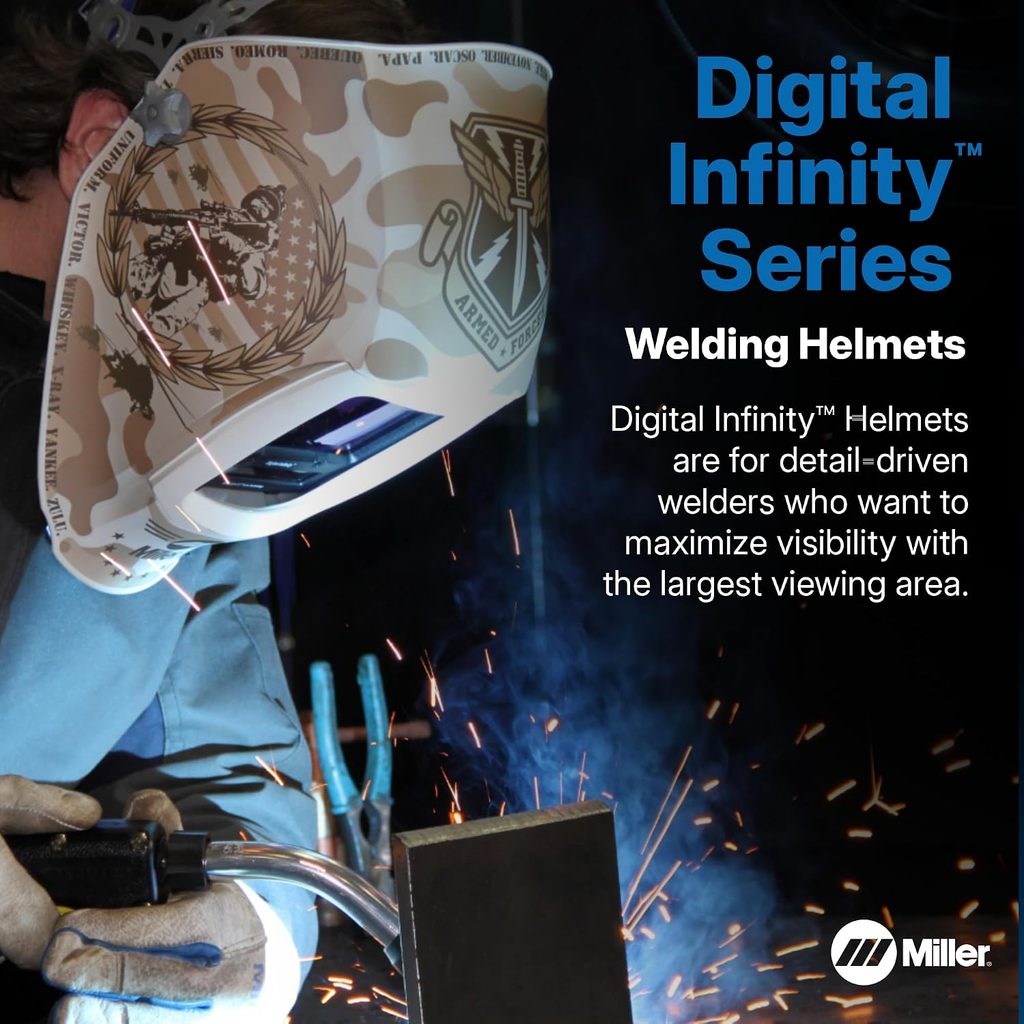
4. Miller Electric Digital Infinity:
Advanced high-definition optics deliver a clearer, brighter and more realistic view for every stage of every weld. It provides the largest viewing area for maximum visibility. It monitors arc time and arc count for quoting and metrics. It automatically sets the helmet sensitivity by sensing your welding environment. Ideal for weld operators who frequently adjust their settings for changing welding environments.
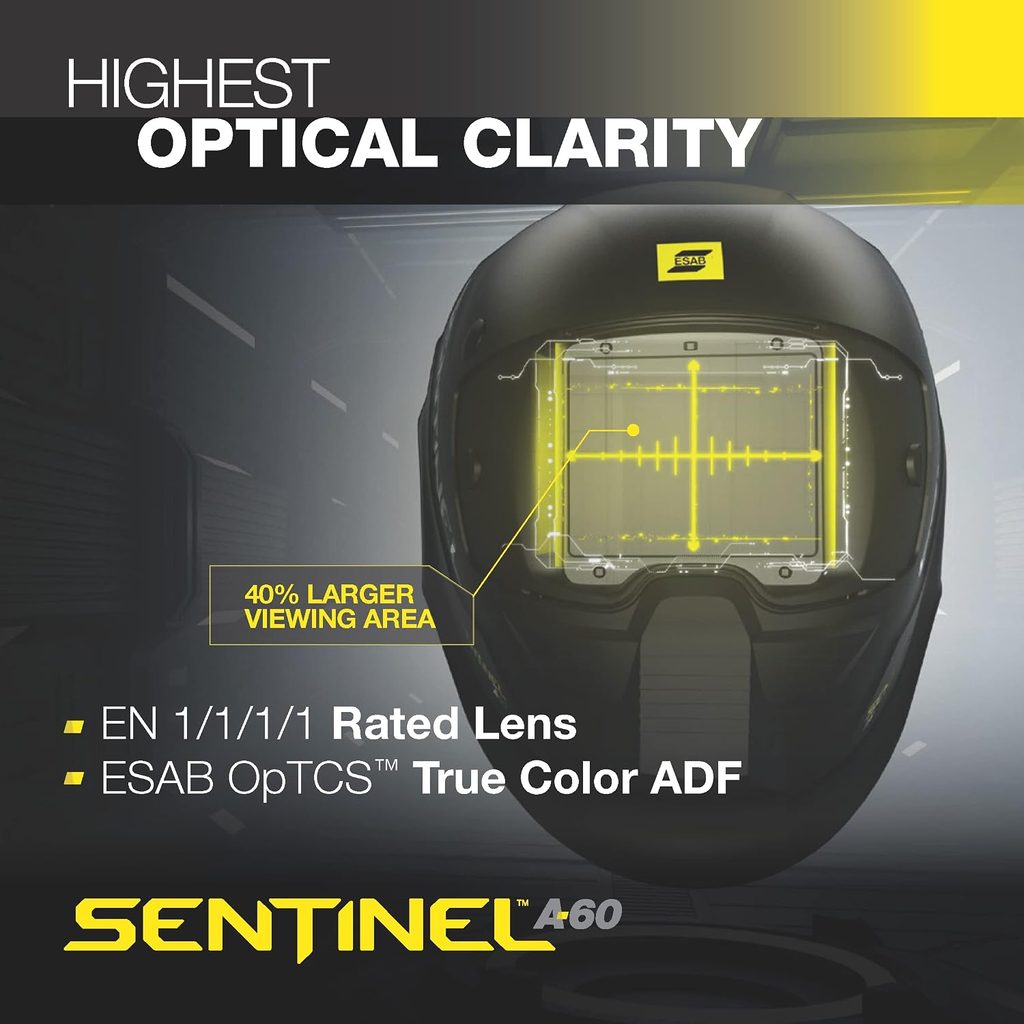
5. ESAB Sentinel:
(4.65 x 2.80 in) and intuitive internal ADF controls including sensitivity and delay. Shade range: DIN 3/5–13, adjustable in 0.5 increments and ADF a shade lock setting. ESAB OpTCS True Color Lens Technology on-board memory for up to 9 settings with 4 arc sensors. It has fast switching time of 0.08 millisecond and replaceable CR2450 battery. It is ideal for pro level welders.
Best for Budget Conscious Buyers:
Budget-conscious buyers can compare selected ANDELI, YESWELDER and Jackson Safety models. Prioritize safety certification, lens performance, spare-part availability and warranty support over unnecessary extra features.
6. ANDELI Auto Darkening MIG Welding Helmet:
A digital control panel shows shade, sensitivity and delay on screen, so you can read your settings instead of guessing at a knob. DIN 3 / 5-9 / 9-13 shade range with 5-level sensitivity and delay adjustment lets you dial in the lens for each process and the delay setting smooths the light-to-dark transition so the lens does not flicker back to clear between tacks. It meets ANSI Z87.1 and CSA Z94.3 safety standards. It is featuring a total viewing area of 7.2″ x 3.2″,(4.6″ x 3.2″ main lens plus two 1.3″ x 2.5″ side lenses)widens peripheral vision so you can see the workpiece edge without turning your head. The main lens auto-darkens in 1/30000s with a 1/1/1/1 optical clarity rating and UV/IR protection stays active in Weld, Grind and Cut modes. It features 2 layers of LCD auto-darkening glass and 1 integrated optical filter for superior clarity and multi-directional protection against harmful UV/IR rays, outperforming standard single-filter designs and offering your eyes real protection.
7. Jakson ADF MIG Hood:
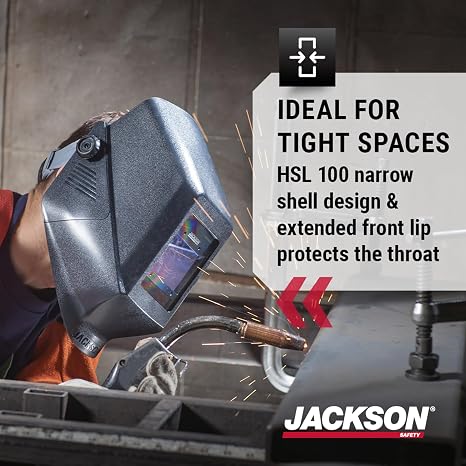
Jackson Safety’s Insight ADF Welding Helmet features the HSL narrow shell design is ideal when working in tight spaces. Its extended front lip provides added neck protection; 3.94″ x 2.36″ viewing area offers unobstructed views without lifting the hood. Its variable shades 9 to 13 and latest advancements in True Color technology deliver a crystal-clear view; 1/1/1/1 optical clarity rating significantly reduces eye strain and fatigue. It is a budget friendly option for MIG welders.
Final Verdict:
Choosing the best welding helmet for MIG welding means balancing safety, optical clarity, comfort, durability and cost. Professional welders may prefer feature-rich options from Lincoln Electric, Miller Electric, ESAB, or 3M, while beginners and occasional users can compare suitable models from YESWELDER and Jackson Safety. Before purchasing, verify the specific model’s safety certifications, shade range, auto-darkening performance, viewing area and replacement-part availability. The right welding helmet can improve visibility and workflow while helping protect your eyes and face during MIG welding. Investing in a well-fitted and properly certified helmet is a practical step toward safer and more consistent MIG welding results.
FAQs
1. What shade should I use for MIG welding?
The appropriate shade depends on the welding current and application. S o, consult the helmet manufacturer’s instructions and applicable safety guidance to select the correct shade.
2. How many sensors should a MIG welding helmet have?
Multiple sensors can improve arc detection when the welding arc is partly obstructed. Three- or four-sensor helmets are common options but the best choice depends on sensor placement, reliability and your working position.
3. How often should I replace a welding helmet?
Replace the helmet if its shell, headgear, filter or other critical components are damaged and cannot be repaired according to the manufacturer’s instructions. Replace cover lenses when scratched, dirty or damaged. Please, follow the manufacturer’s guidance for filter service and replacement.
4. What are the different types of welding helmets?
Welding helmets are split into several main styles based on how their lenses function, their shape and the specialized environment they are built for.
5. Is an auto-darkening welding helmet better for MIG welding?
Yes. Auto-darkening helmets make it easier to position the torch and move between welds without repeatedly lifting the helmet. But a properly selected passive helmet can also provide effective protection.